Friday, October 6, 2017

Study finds financial rewards can deter whistleblowers

Monetary awards for fraud whistleblowers may seem like a no-brainer, but a new study has found that offering cash for fraud detection may actually negatively effect individual's motivations.
“When you mention financial incentives to potential whistleblowers, you change the decision frame from ‘doing the right thing’ to that of a cost-benefit analysis,” stated James Wainberg, assistant professor of accounting at Florida Atlantic University’s College of Business and one of the study's authors. “As a result, when the perceived risks of reporting are greater than the potential rewards, people will be much less likely to report frauds than had they not been told about the existence of an incentive program to begin with.”
Wainberg co-authored the study, recently published in Auditing: A Journal of Practice & Theory, with Leslie Berger, assistant professor of accounting at Wilfrid Laurier University, and Stephen Perreault, associate professor at Providence College School of Business.
More and more businesses and regulatory agencies are either currently offering or mulling the option offering monetary rewards for the reporting of unscrupulous behavior, but with a catch -- a minimum amount of fraud. The Securities and Exchange Commission, for instance, will offer rewards only if a minimum of $1 million is recovered.
The study's researchers found this type of parameter of fraud reporting would boost the chances that not all fraud will be reported. In an experiment conducted by the researchers, complete with auditors and accounting professionals as test subjects, it was found that fraud was less likely to be reported when a monetary incentive was available, but the amount of fraud committed was less than a given threshold.
“What’s going on is this hijacking of the moral decision frame by the financial incentives,” Wainberg added. “Once that happens, whether or not to report the fraud will largely become a function of an individual’s perceptions of reward adequacy in light of the perceived risk of reporting. So that’s a caution to regulators, compliance professionals and others in corporate governance who are interested in understanding the strengths and weaknesses of offering financial incentives to whistleblowers."
Fraud minimums were also found to significantly delay reporting until the problem was too big to ignore, in turn minimizing the chances of exposing deceit in the early going.
"The question we need to ask is do we really want to incentivize whistleblowers to delay reporting frauds in order to maximize their rewards?" Wainberg concluded.

Thursday, October 5, 2017

Lawmakers question IRS’s $7.25M no-bid contract with Equifax

Leaders of the Senate Finance Committee said they were “taken aback” to find out the Internal Revenue Service has recently signed a $7.25 million contract with Equifax for verifying taxpayer identities after the company admitted to a massive data breach exposing the personal information of approximately half of all Americans.
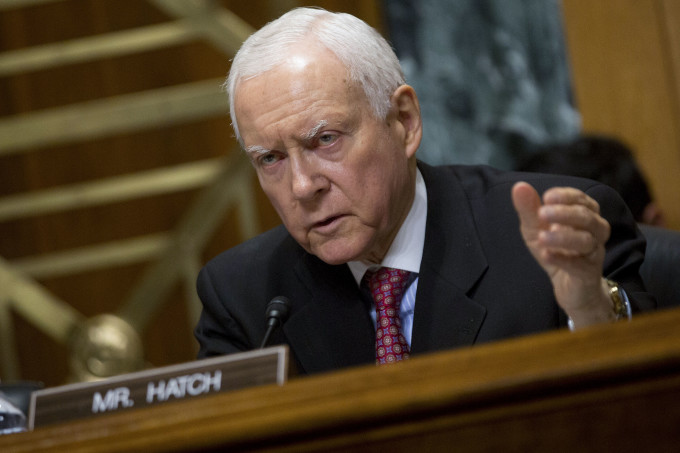
Senate Finance Committee chairman Orrin Hatch, R-Utah, and ranking member Ron Wyden, D-Ore., sent a letter Wednesday to IRS Commissioner John Koskinen asking about why the agency would award a contract to Equifax after the company exposed the private information of more than 145 million Americans. The senators are investigating the impact of the data breach on Americans and federal agencies, and they asked Koskinen to explain the IRS’s rationale for trusting the company to aid with combating identity theft.
“We were taken aback when it came to our attention that last week the IRS awarded Equifax a sole source contract worth over seven million dollars for ‘verify[ing] taxpayer identity and ... assist[ing] in ongoing identity verification and validations needs of the Service,’” they wrote.
They asked Koskinen to help them better understand the IRS’s new and existing contracts with Equifax, and requested information including a copy of the contract and details on the services Equifax will perform. They also wondered, “Why was this awarded as a sole source contract especially in light of the recent breach?” and asked what steps the IRS is taking to ensure that Equifax is protecting taxpayer information. They also asked for a copy of every active contract between the IRS and Equifax, and they want the information no later than Oct. 11, 2017.
Equifax’s former CEO, Richard Smith, who resigned last week amid the outcry over the data breach, testified before Congress Tuesday and blamed an employee for making the error. He repeatedly apologized, however, saying, “As CEO, I was ultimately responsible for what happened on my watch. Equifax was entrusted with Americans’ private data and we let them down.”
Other lawmakers also reacted with shock at the deal, with one of them comparing it to an article on the satirical website the Onion. "It has come to my attention that on September 30th your agency awarded a sole source contract to Equifax to 'verify taxpayer identity' and 'assist in ongoing identity verification and validations,' I was initially under the impression that my staff was sharing a copy of the Onion, until I realized this story was, in fact, true," wrote Rep. Earl Blumenauer, D-Ore., in a separate letter to Koskinen. "As I’m sure you are aware, Equifax is the firm that appears to have been grossly negligent in allowing a massive data hack of the personal information of 145 million Americans. What’s more, this news was public in early September, giving your agency plenty of time to re-evaluate this decision. As a result, I am shocked that the IRS would contract with this firm for activities that they are clearly unfit to carry out."
Rep. Susan DelBene, D-Wash., also sent a letter to Koskinen outlining her concerns. “I write with deep concern over the recently reported decision by the Internal Revenue Service (IRS) to award a no-bid contract to Equifax,” she wrote. “I must question the IRS’ decision to move forward with this contract in light of the ongoing investigations into these incidents, and the general fitness of this company as a federal government contractor to perform functions that are not unrelated to the massive failures outlined above. I request a prompt response on the reasoning behind this decision, as well as a comprehensive explanation of alternatives to this seemingly reckless use of taxpayer dollars.”

Wednesday, October 4, 2017

Excel is about to get smarter

Microsoft Office 2019, set for release by the end of the year, will feature a more powerful Excel that will use artificial intelligence to perform more complex data analysis.

The souped up Excel will be able to understand more about a user’s inputs, and pull information from the internet as needed, TechCrunch reported. For example, users can tag a list as a certain category — such as “company names” — and Excel can get more information about the companies named in that list from Microsoft’s Bing search engine, which will be connected with the spreadsheet. Excel will also be able to discern what category a list might fall under by reading the content of the list.
Also new will be a built-in tool that can create visual representations of the data within an Excel spreadsheet. Dubbed Insights, it is modeled after a similar tool in Microsoft’s Power BI suite. The charts and graphs are manipulable by the user as well.
“Office 2019 will add new user and IT capabilities for customers who aren’t yet ready for the cloud,” said Jared Spataro, Microsoft’s general manager for Office, in a blog post. “For example, new and improved inking features—like pressure sensitivity, tilt effects, and ink replay—will allow you to work more naturally. New formulas and charts will make data analysis for Excel more powerful ... Cloud-powered innovation is a major theme at Ignite this week. But we recognize that moving to the cloud is a journey with many considerations along the way. Office 2019 will be a valuable upgrade for customers who feel that they need to keep some or all of their apps and servers on-premises, and we look forward to sharing more details about the release in the coming months."

Tuesday, October 3, 2017

IMA CEO Jeff Thomson favors accountants over robots

Photo courtesy of Ed Mendlowitz
Institute of Management Accountants president and CEO Jeff Thomson unveiled a new campaign to emphasize the value of management accountants as more jobs fall prey to robots and automation.
During a speech Monday at a meeting of the Accountants Club of America in New York, Thomson discussed how accountants can deal with the threat of automation by learning new skills and technologies to stay on top of the latest trends. He also showed a new advertising campaign for the IMA’s Certified Management Accountant credential in which a robot gives up its seat at a conference room table to accommodate an accountant, telling him, “Sorry, I was just keeping your seat warm.” The commercial can be viewed on YouTube.
Thomson opened his speech by observing a moment of silence for the victims of the mass shooting in Las Vegas outside the Mandalay Bay hotel. The shooter, Stephen Paddock, was later identified as a retired accountant.
During his speech, Thomson cited reports about how job functions would be growing increasingly automated in the future, including in the accounting profession. A Deloitte report, “The robots are coming,” suggested that 56 percent of finance roles have a high probability of automation, and according to the World Economic Forum's Future of Jobs report, 65 percent of children entering primary school are now expected to end up working in roles that currently do not exist.
“We ought to be working with a sense of urgency at the IMA, the AICPA, the New York State Society [of CPAs] and organizations around the world with academia, with partner firms, with companies, to be talking more about that than about these fancy statistics,” said Thomson. “Whether they’re off by an order of magnitude, I could care less.”
He cited a series of articles in recent industry publications including Accounting Today about the impact of increased automation on audit fees, and how CFOs and others in the finance industry may be becoming obsolete or turning into DFOs, or digital finance officers. “There’s a lot going on in terms of impacts on the audit and the automated audit,” said Thomson. “What’s the role of the advisory professional, the human being? Whether it’s woe is me or great new jobs are going to be created, change is difficult, and getting ahead of change is even more difficult. That’s why we need to be talking with a sense of urgency and a call to action about the competencies that we need to develop today, not in the future.”
Thomson also discussed his earlier career at AT&T watching as automation took over the telecommunications industry.
“What can you do to be future proof, or as future proof as possible?” he asked. “Automation is not coming. It’s here now. It will increase quickly. It’s not a bad thing. I would argue that we as advisors, strategic business partners, have responsibilities not only for operational effectiveness, which is part of automation and cost savings, but also for the long-range strategy. That’s just coming to grips with reality. Embrace technology as an opportunity, not just a risk. Develop your skills in data science and data analytics, synthesis and relationship management. Whether it’s Watson or all the smart robots and chatbots, they still only operate within a very, very narrow scope of influence. They have to be programmed. If we draw the line there and say that’s all that’s going to happen, we’re going to be in big trouble. But I think at least for a while, there’s plenty of room for human judgment, human insight and business savvy.”

Monday, October 2, 2017

Winning the coming divergence in accounting

There have always been differences between the biggest firms in accounting and the rest — the 97 or 98 percent of firms that have, say, fewer than 20 people. Both groups serve very different client bases, for instance, using different tools; they recruit employees in different ways and offer very different careers. Yet at bottom, accountants have always all been recognizably of the same tribe, with more similarities than differences, performing work that is — allowing for scale — much the same.
But that may not be the case for long, according to Illinois CPA Society president and CEO Todd Shapiro. A series of technological innovations — from big data, to artificial intelligence and machine learning, to Blockchain and robotic process automation — are in the midst of completely reshaping the services of the largest firms, and the skill sets of their employees. Already, the Big Four are looking to hire more entry-level staff with skills in data analysis, and the expectation is that being savvy in technology will soon be as valuable as more traditional accounting skills (if not more so) in looking for a job at the biggest 3 to 4 percent of firms.
But for the rest? Not so much, according to Shapiro: “If you talk to the 43,400 firms with less than 20 people who service Main Street America, they’re not using Blockchain,” he said. “It’s going to take time. It’s not now, not next year, not in seven years. ... Data analytics aren’t going to be for small businesses in the next seven years.”
And while the Big Four and their like have always adopted new technology more quickly, the major difference here is that the skills required of the accountants using the technology will be different, too, which was not the case before. And that’s going to lead to a major split in accounting over the next five to seven years, Shapiro suggested. “It’s going to be more of a divergent profession than we’ve had in the past,” he said. “Is a small firm going to be using computers to read contracts? Their reconciliations won’t be done by computers. And what if a Big Four person wants to go to a small firm? They’re going to say that a computer does most of those tasks, while the small firm will need someone who can do all those tasks. The small firm will say, ‘I don’t have drones doing inventory.’”
Over the next five to seven years, he suggested, this divergence between the staffing demands at the more tech-forward large firms, and those of the more traditional smaller practices, will lead to two different types of accountants, which will complicate many of the profession’s traditional pathways for the near- and mid-term.
In the long run, though, Shapiro believes that progressive midsized firms will drive a reconvergence, hiring the new kind of accountant from the Big Four, and smaller firms will eventually follow along, driven in no small part by their small-business clients: “Even the corner grocery store 15 years from now will have sold out to younger generations that are more tech-savvy,” he explained. “And those businesses will begin to adopt RPA for inventory, accounting, and so on. So who’s going to take care of those businesses?”
His analysis of the future is compelling, if slightly sobering. But my question is this: Do small firms have to wait? Can’t they start diving into these new technologies and services now?
Yes, the expense currently involved in some of them can be prohibitive — but that won’t always be the case, and there are many tools (in data analysis particularly) that are affordable right now. Why not start building those skill sets and the base of those new service offerings sooner, rather than later? One of the beauties of technology is how it lowers barriers to entry — if you’re willing to try.
The time to win the divergence is now, for firms of all sizes.

Thursday, September 28, 2017

What accountants need to know about blockchain

The phrases blockchain and artificial intelligence are mentioned so frequently in academic articles, practitioner publications and the general media landscape that they may have overshadowed the previous hot topic of data analytics.
With all of the coverage, debate and questions surrounding these areas, it would be relatively easy to get lost in the weeds with what these technologies mean for the accounting profession. In addition to, and compounding, the potential confusion surrounding these topics is the somewhat justifiable fear that these technologies will automate large functions of the accounting profession. Accounting professionals, trained and educated in quantifying data, analyzing different streams of information, and increasingly technology savvy, are facing the reality that technology may surpass, and ultimately, replace many practitioners.
Such a perspective, however, only represents a partial and incomplete view of the implications that blockchain and artificial intelligence will have on the profession. Bitcoin may be the most commonly associated term and aspect of blockchain technology, but that only represents the proverbial tip of the iceberg. Although some organizations are indeed using bitcoin for processing transactions, are accepting payment from customers in bitcoin, or the other various cryptocurrencies, this is only one potential implication for the accounting profession. Regardless of whether an accountant works in public practice, private industry, academia or a consultative capacity, it is critically important to understand the potential changes that are coming.
Blockchain technology has the potential, and already is, changing how the accounting profession operates and will navigate the business landscape moving forward. While the specific implications of these changes will differ from organization to organization, and some of these changes will occur faster than others, there are some themes that appear to be consistent. Clearly, this short list is not meant to be all-encompassing, but rather is meant to focus the conversation on the changes blockchain is having in a manner that is productive and applicable to practitioners.
To do that, however, accountants need to understand what exactly blockchain technology is, and what is might mean for the profession. Let’s take a look at three things every accountant needs to know about blockchain
1. Blockchain secures information and reduces alterations.
Although the basis for the spread of blockchain technology is the internet, and some uses have involved criminal enterprises, the basis of the technology is the encryption that secures transactions and records. To put it simply, every transaction that is conducted using blockchain technology is encrypted, the involved participants are identified by a string of characters, and after a certain period of time has passed (which may vary) all of these transactions become part of the block. After this block has been finalized, it is broadcast to all parties associated with that network, or chain. If it is altered at a future date, reviewers of the block (record) will be able to identify when due to time stamp functionality. Clearly this technology will lead to changes in not only how audits are performed, but will also drastically reduce the amount of time needed to verify or confirm certain balances.
2. Blockchain will reduce errors.
Especially as it pertains to accounts payable or accounts receivable, the potential for blockchain to be accretive from the very beginning is a relatively straight forward concept. Building on point 1, if the participants in a certain transaction are identified, the time and date of the transaction is verified, and the associated data is secured, the possibility of errors decreases dramatically. Specifically, the number of transposition corrections, verification of payments, and other lower-value activities can be automated by blockchain and ultimately replaced with higher-value activities. Reducing errors, both during the audit process itself as well as during ongoing operations, will add value to clients in a quantifiable manner. This may certainly place some current accounting jobs in jeopardy, but also provides numerous opportunities for accounting practitioners willing to learn, and eventually master, blockchain technology.
3. Accounting will become real time.
Just like doctors are increasingly able to monitor the health of patients in real time thanks to advances in technology, blockchain technology will help enable accountants to monitor financial performance in real time. Due to the fact that blockchain technology is based on, and leverages, an internet-based and decentralized platform, it will be simpler than before to track and monitor the inflows and outflows from a business. Building on the increasing utilization of cloud computing technology by both accounting organizations and client firms, this facet of blockchain represents a logical step in this same direction. Leveraging these advances in technology, and the ability for both business owners and accountants to keep abreast of changes in the business will only help accountants elevate their position to that of trusted business advisor.
Blockchain technology is already disrupting the accounting profession, and will continue to do so moving forward, but it will deliver both opportunities and challenges. Understanding the implications and possibilities of this technology on the profession is essential for practitioners seeking to keep up to date and relevant in a rapidly changing marketplace. Technology tools can provide opportunities, and CPAs have both the mindset and opportunities to take advantage of them.

Wednesday, September 27, 2017

IRS looking for help with tax treaty arbitration

Image: Bloomberg News
The Internal Revenue Service is looking for people who are interested in serving as U.S. members of arbitration boards, along with non-U.S. citizens who would like to serve as arbitration board chairs, for U.S. tax treaties providing mandatory binding arbitration.
Some U.S. income tax treaties with other countries provide for mandatory binding arbitration to resolve cases in which the authorities have tried but were unable to reach a complete agreement. So far, arbitration is included in the U.S. income tax treaties with Belgium, Canada, France, and Germany. Most tax treaties aim to avoid double taxation of companies and individuals in different countries.
A case is settled through an arbitration board made up of three members chosen by the various authorities. Depending on the treaty, within 60 to 90 days of the appointment of the arbitration board chair, each authority will submit for the board’s consideration a proposed resolution paper and a supporting position paper with annexes.
The arbitration panel needs to select one of the two proposed resolutions for each issue presented and inform both competent authorities of its determination in writing, depending on the treaty, within six and nine months of the appointment of the chair. The written determination shouldn’t include any rationale or analysis for the selection and won’t be considered precedential. No information relating to the arbitration proceeding, including the written determination, should be disclosed by the board members.
The arbitration board will likely conduct its meetings through telephone and video conferences. Board members will be compensated for up to three days of preparation, up to two days of meetings, and, if applicable, and depending on the treaty, certain travel days and travel expenses. The IRS expects applicants to be ready to serve on at least one arbitration board any time within three years after being named to the registry.
Anyone who is interested should send an email to lbi.ttpo.apma.feedback@irs.gov. For questions, contact Anthony Ferrise at Anthony.J.Ferrise@irs.gov or call him at (202) 317-8622.